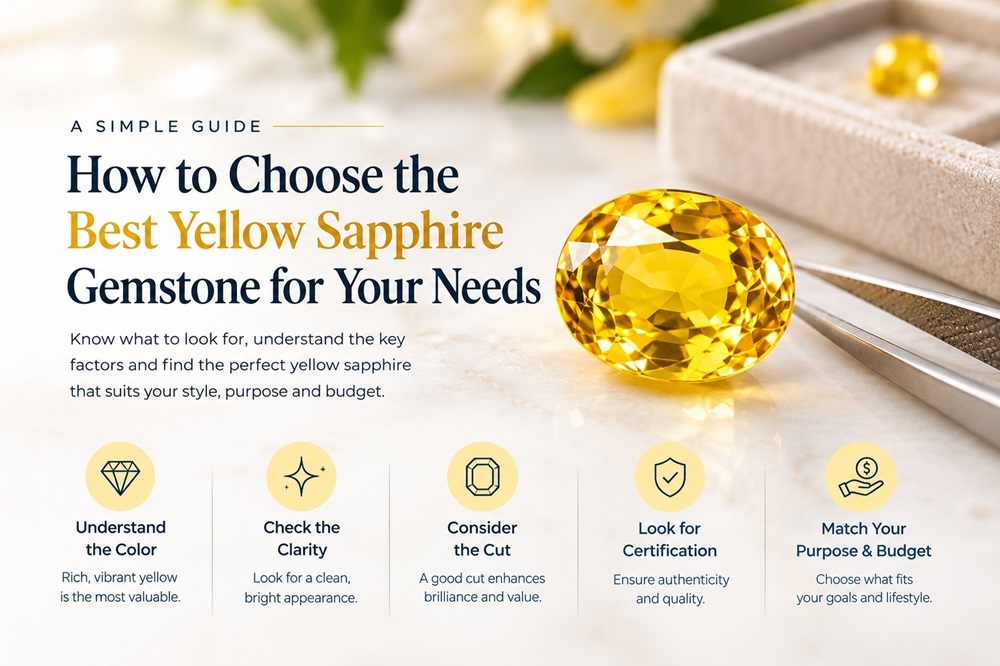
Yellow Sapphire, also known as Pukhraj, is one of the gemstones known for its vivid yellow color, luster, and its association with the planet Jupiter (Guru). Whether you’re buying one to complete a piece of fine jewellery or to wear for astrological purposes, choosing the right stone isn’t as simple as picking the brightest yellow gem on the shelf. You could be looking at two almost identical Yellow Sapphires, same colour, same carat weight, yet they could be miles apart when it comes to their prices.
The market for Yellow Sapphire is wide and, unfortunately, inconsistent. Prices for stones that look nearly identical to the untrained eye can differ by a factor of ten or more, depending on treatment, origin, and certification. This guide walks through everything you need to evaluate before buying: the core quality factors, Yellow Sapphire gemstone price, the difference between natural, treated, and synthetic stones, why origin matters, how certification protects you, and how to match your purchase to your specific need, investment, or astrology.
What Is Yellow Sapphire (Pukhraj)?
Yellow Sapphire, commonly known as Pukhraj belongs to the same corundum mineral family as Ruby and Sapphire. Pure corundum is colorless; the yellow color comes from trace elements, especially iron. These trace impurities are the reason why Sapphires come in a variety of colors like blue, pink, and yellow. Yellow Sapphire gemstone rings are worn to strengthen the influence of Jupiter, a planet associated with wisdom, prosperity, and good fortune.
Not every yellow stone sold as “Yellow Sapphire” is actually a sapphire. Citrine, yellow topaz, and even yellow-tinted glass are sometimes passed off as Yellow Sapphire, especially in unregulated markets or informal online sales. These substitutes are far less durable and far less valuable, which is exactly why understanding what you’re buying and verifying it matters so much.
Key Factors to Evaluate Before You Buy Yellow Sapphire (Pukhraj)
Gemologists evaluate colored stones using a framework similar to the “4 Cs” used for diamonds: color, clarity, cut, and carat weight. However, for colored gemstones, color usually carries the most weight in determining value. Other important factors that determine Yellow Sapphire’s (Pukhraj) rate are Origin, Treatment, and Certifications.
Color
Color is the single most important factor in a Yellow Sapphire’s beauty and value. The most prized shade for Yellow Sapphire is a rich, vivid golden yellow, sometimes described as “canary yellow“.
Lower-quality stones are often pale, greenish-yellow, or brownish-yellow in color. These are typically less expensive but also less visually striking. Since color can shift depending on the light source, always verify any stone you’re considering under multiple lighting conditions, such as natural daylight, indoor incandescent light, and fluorescent light.
Clarity
Clarity refers to the presence or absence of internal inclusions and external blemishes. Yellow Sapphire generally falls into a category where eye-clean stones (no inclusions visible to the naked eye) are achievable and desirable. However, minor inclusions are normal and don’t necessarily indicate a problem.
Cut
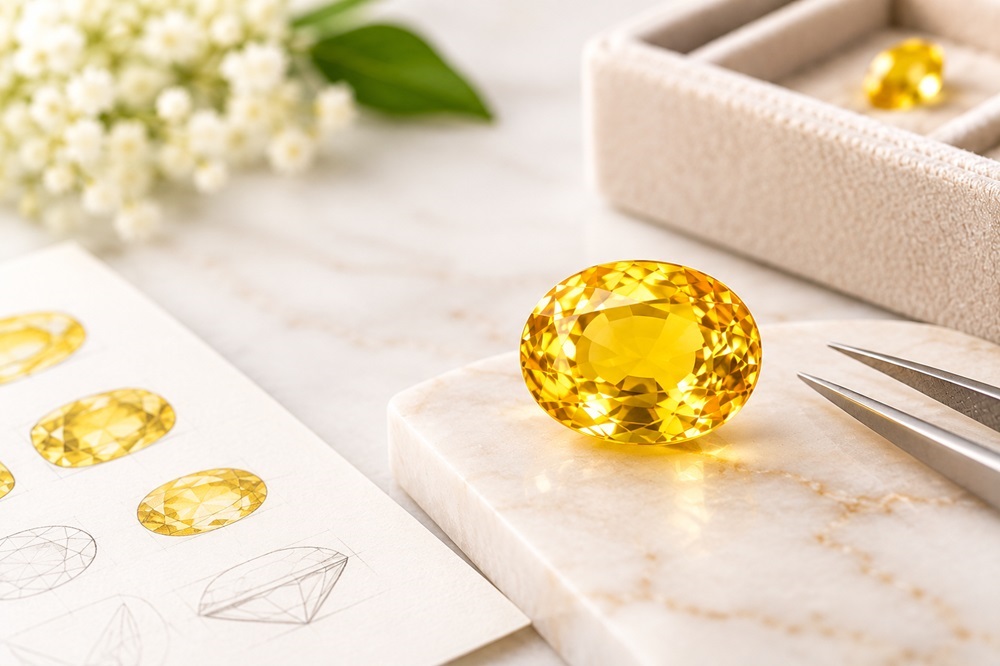
The cut of a Yellow Sapphire affects how much it sparkles and how well it reflects light. Common cuts for Yellow Sapphire include oval, cushion, round, and emerald cut. Oval and cushion are especially the most popular cuts for Yellow Sapphire because they usually maximize both color and carat retention.
Carat
Carat refers to the weight of the gemstone. The price of a Yellow Sapphire changes significantly with the change in carat weight. Larger stones become disproportionately more expensive because they’re rarer, especially in higher qualities. For example – a 3-carat stone of a given quality will typically cost significantly more than three times the price of a comparable 1-carat stone.
Origin
The origin of the Yellow Sapphire can significantly affect its price and quality. The most popular origins of Yellow Sapphire (Pukhraj) are:
- Sri Lanka (Ceylon)
- Madagascar
- Bangkok (Thailand)
- Australia
- Myanmar (Burma)
Kanak Pushparaga from Ceylon is highly prized for its vivid yellow and higher transparency. Yet, it is essential to understand that the quality of the stone cannot be assessed solely based on its source.
Natural vs. Treated vs. Synthetic Yellow Sapphire (Pukhraj)
|
Type |
What It Is |
Color/Clarity Enhancement |
Value |
Best For |
|
Natural (Untreated) |
Mined corundum, no processing to alter color or clarity |
None. Color and clarity are as formed in nature |
Highest; rarest category |
Astrological use, investment/collection, buyers wanting maximum authenticity |
|
Heat-Treated |
Mined corundum, heated under controlled conditions to improve color/clarity |
Color and/or clarity enhanced via heating |
Moderate; widely accepted and common in the trade |
Jewelry and fashion, where visual appeal matters more than treatment history |
|
Synthetic |
Lab-created corundum, same chemical composition as natural sapphire |
Grown, not “treated”. Color is inherent to the lab-growth process |
Low |
Budget jewelry buyers wanting the look at a fraction of the cost |
Buy Yellow Sapphire Based on Your Purpose
The right stone depends on what you’re buying it for. Knowing your purpose will help you choose the right type of Yellow Sapphire (Pukhraj) for you.
- If you’re buying jewelry for everyday style, a heat-treated stone with gorgeous color and a clean, well-cut finish will look every bit as beautiful on your hand as an untreated one, that too at a fraction of the price.
- If you’re buying for astrological reasons, the calculus changes completely. Always choose a natural, untreated Yellow Sapphire certified by a reputed gemological lab, because the whole point of wearing it rests on its authenticity. Take your time here, and don’t let a good-looking but treated stone tempt you away from what the purpose actually calls for.
- If you’re buying as an investment or building a collection, go for natural, untreated, beautifully colored Yellow Sapphire, ideally Ceylon-origin, and backed by a reputed Gemological lab. These stones tend to hold their value over time.
Where and How to Buy Yellow Sapphire (Pukhraj) Safely
With so much variation in quality and so many ways a Yellow Sapphire can be misrepresented. Where you buy matters just as much as what you buy. Ask questions, and expect real answers. Beware of any deal that feels too good to be true.
At GemsRoot, every Yellow Sapphire we offer comes with full transparency on origin, treatment status, and quality grading. All of this is clearly laid out and backed by IGI, GIA, GII, or GRS certification.
Certification: Why You Shouldn’t Skip It
A proper certificate should confirm:
- That the stone is genuine corundum (not an imitation)
- Whether the stone is natural or synthetic
- Whether the stone has been treated (and what kind of treatment, if any)
- The stone’s weight, dimensions, and cut
- Geographic origin
Conclusion
You need to understand a handful of interconnected factors. Color, clarity, cut, and carat are the main factors that affect the price of Yellow Sapphire, followed by more consequential questions on treatment, origin, and certifications. Taking the time to verify what you’re buying, and working with a reputable, certified source, is what turns a purchase into a confident, informed decision rather than a gamble. When in doubt, consult a certified gemologist before finalizing any significant purchase.