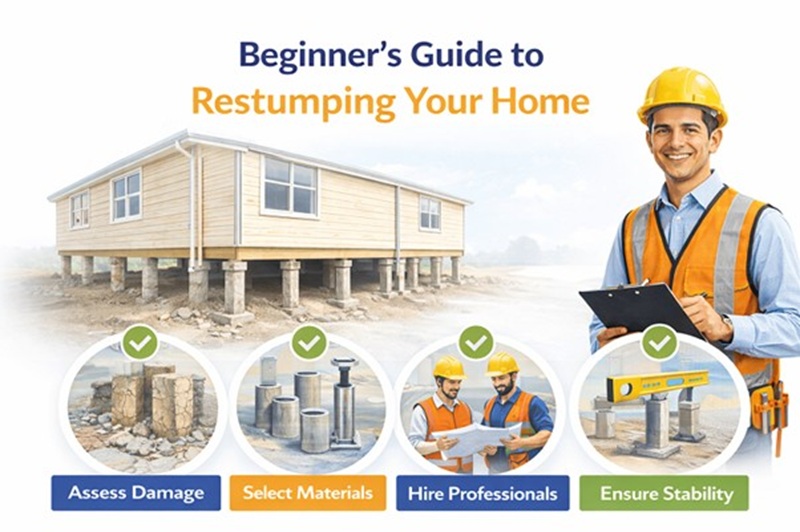
Have you noticed your floors feeling a bit bouncy lately? Are doors sticking when they never used to? Perhaps you’ve spotted some mysterious cracks appearing in your walls? If you’re nodding along, your home might be trying to tell you something important about its foundations.
For homeowners, restumping is a topic that eventually lands on everyone’s radar. Whether you’ve just bought an older property or you’ve lived in your home for decades, understanding what’s happening beneath your floorboards is absolutely essential. After all, your home’s stumps are quite literally holding everything up.
In this guide, we’ll walk you through everything you need to know about restumping. From spotting the warning signs to understanding costs, choosing the right materials, and finding a reliable contractor—we’ve got you covered. By the end, you’ll feel confident making informed decisions about your home’s foundation. Let’s get stuck into it.
What Is Restumping and Why Does Your Home Need It?
Restumping, sometimes called reblocking, involves replacing the stumps that support your home. These stumps are the vertical posts sitting between your floor and the ground, essentially forming the foundation of your house. When they deteriorate, your entire home’s structural integrity is at risk.
Homes are particularly vulnerable to stump problems due to factors like moisture, soil movement, and age. For some homes, restumping may be necessary to restore stability.
It’s worth noting the difference between restumping and underpinning. While restumping replaces the stumps themselves, underpinning strengthens the footings beneath them. Some homes need both, depending on the extent of the damage. A professional assessment will clarify exactly what your property requires.
How Do I Know If My House Needs Restumping?
Spotting the warning signs early can save you thousands of pounds and prevent more serious structural damage. The most obvious indicator is bouncy or uneven floors. If walking across your lounge room feels like traversing a trampoline, your stumps are likely failing.
Cracks in walls are another red flag, particularly diagonal cracks near door frames and windows. Sticking doors and windows that suddenly won’t close properly often indicate foundation movement. You might also notice gaps appearing between walls and ceilings or floors.
When should you call a professional for an inspection? If you’ve noticed any combination of these symptoms, don’t delay. A qualified inspector can get under your home and assess the condition of each stump. They’ll provide a detailed report on what needs attention. For older homes, scheduling an inspection every few years is a smart preventative measure.
What Causes Stumps to Fail?
Understanding why stumps deteriorate helps you protect your investment long-term. Moisture damage plays a significant role. Poor drainage around your home allows water to pool near stumps, accelerating rot in timber and corrosion in steel. Leaking pipes, blocked gutters, and inadequate site drainage all contribute to premature stump failure.
For homes with original timber stumps, age and natural deterioration are inevitable. Most timber stumps have a lifespan of 40-60 years, though this varies based on conditions. Tree roots also cause problems, growing into and around stumps, shifting them out of position. Environmental factors like termite activity can devastate timber stumps surprisingly quickly.
How Much Does Restumping Cost?
Let’s talk numbers. Restumping costs vary considerably depending on several factors. The size of your home matters most—more stumps mean higher costs. The accessibility under your house affects labour time. The condition of existing stumps and whether additional work is needed also impacts the final price.
For an average three-bedroom home, expect to pay somewhere between $10,000 and $25,000 for a complete restumping job. Partial restumping, where only some stumps need replacement, costs less. Individual stump replacement typically runs $150-$500 per stump, depending on material choice.
Speaking of materials, concrete stumps are generally the most cost-effective option. Steel stumps cost more upfront but offer excellent longevity. Treated timber remains popular for heritage properties or where matching existing stumps is preferred. Getting at least three quotes from local contractors ensures you’re paying a fair price.
The Restumping Process: What to Expect
Knowing what happens during restumping removes much of the anxiety around the process. It begins with an initial assessment where contractors inspect your subfloor space, count stumps, and identify any additional issues requiring attention.
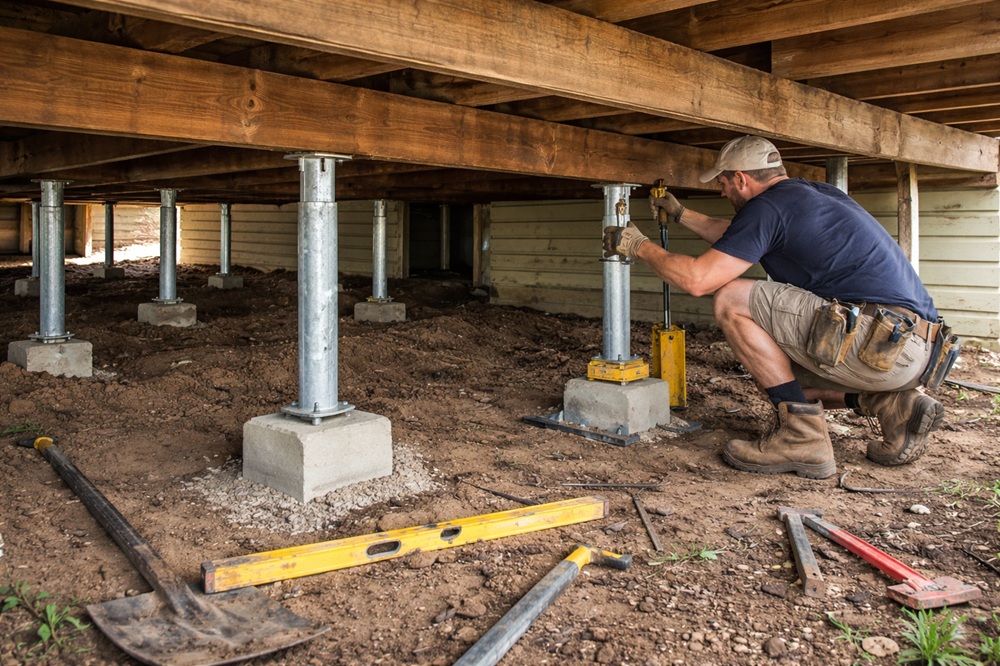
The work itself follows a methodical approach. Contractors temporarily support your floor using jacks, remove the old stumps, prepare the ground, and install new stumps. They then lower the floor onto the new supports and make final adjustments to ensure everything is level.
How long does it take? Most restumping jobs complete within one to two weeks, though larger homes or complicated sites may take longer. The good news is you can usually stay in your home during the work. There’ll be some noise and vibration, but most contractors work to minimise disruption to your daily life.
Choosing the Right Stumps for Your Home
Selecting the appropriate stump material is crucial for long-term performance. Concrete stumps remain the most popular choice for homes. They’re termite-proof, moisture-resistant, and typically last 50-100 years. The main downside is they’re heavy, making installation more labour-intensive.
Steel stumps are ideal when working in tight spaces or on sloping blocks. They’re adjustable, which is brilliant for fine-tuning floor levels. However, they can corrode in certain soil conditions, so protective coatings are essential in specific environments.
Treated timber options still have their place, particularly for heritage homes requiring period-appropriate materials. Modern treatments significantly extend timber’s lifespan, though it still won’t match concrete or steel for longevity. Given most climates, concrete generally represents the best all-round choice for most properties.
How to Choose a Restumping Contractor
Finding the right contractor makes all the difference. Start by asking essential questions: How long have they been operating? Can they provide local references? What warranties do they offer? Are they licensed and insured?
In most regions, restumping contractors must hold appropriate building practitioner registration. Always verify their credentials through the local authority. Adequate public liability and workers’ compensation insurance protects you from potential claims if something goes wrong.
Watch out for red flags like unusually low quotes, reluctance to provide written contracts, or pressure to make quick decisions. Why does local experience matter? Contractors familiar with the specific soil conditions and common issues affecting homes in your area understand your needs better.
Do I Need a Permit for Restumping?
Permit requirements can be confusing, so let’s clarify things. In most cases, restumping like-for-like doesn’t require a building permit. However, if you’re changing the building’s footprint, raising floor heights, or making structural alterations, permits become necessary.
Heritage homes have additional considerations. If your property has heritage overlay protection, you’ll need to consult with local authorities before proceeding. Certain restrictions may apply regarding materials and methods.
Reputable contractors handle compliance matters routinely. They’ll advise whether permits are needed and often manage the application process on your behalf. This takes the stress out of navigating bureaucratic requirements.
Also read: Know the Right Time to Call Up the House Restumping Service Provider
Can I Restump My House Myself?
DIY restumping might seem tempting given the potential cost savings. However, the risks significantly outweigh any financial benefits. This isn’t like painting a room or installing shelves—we’re talking about your home’s structural foundation.
The dangers include house collapse during work, personal injury from heavy materials and equipment, and improper installation leading to ongoing problems. Without specialised equipment and knowledge, achieving proper levels and secure connections is extremely difficult.
Professional help is non-negotiable for complete restumping jobs. If you’re handy and a single stump needs minor adjustment, that’s potentially manageable. Anything beyond that requires qualified professionals with appropriate insurance and expertise.
Protecting Your Home’s Foundation
Restumping represents a significant investment, but it’s one that protects your home’s structural integrity for decades to come. We’ve covered the warning signs to watch for, what causes stump failure, typical costs, and how to choose both materials and contractors wisely.
Taking action early when you spot problems prevents more extensive and expensive damage down the track. New stumps can positively affect your property value too, making this work a smart investment whether you’re planning to stay or eventually sell. Your home is likely your biggest asset. Looking after what’s underneath it deserves proper attention. If you’ve noticed any warning signs we’ve discussed, reach out to a local restumping specialist for an inspection. Your future self will thank you for taking care of business today.